
All Stories

A Guide to Vitasunn Nutritionals' Mood Support Lineup for 2026
This guide explores Vitasunn Nutritionals' mood support lineup for 2026, focusing on products like Natrol Ginkgo Biloba and Jarrow Formulas SAM-e. It examines their formulations, key features, and considerations for choosing a supplement that aligns with individual wellness needs.

Inside the Agent Loop: How Autonomous AI Systems Perceive, Reason, and Act
Autonomous AI agents are built around an iterative loop where a model reasons about a task, takes an action, observes the result, and repeats until the task is complete. Understanding this core architectural pattern and its associated design philosophies is key to grasping how these systems achieve adaptive autonomy.

Why Quantum Hardware Breaks Classical Threat Modeling — and a Three-Layer Framework for Fixing It
Classical cybersecurity threat models fail for quantum hardware because its unique physical properties and operational models do not align with traditional assumptions. This article proposes a three-layer framework to classify and address quantum hardware vulnerabilities present in today's NISQ devices.

Fusion's Real Barrier Isn't Science—It's Economics: A Framework for Judging Commercial Claims
Fusion energy's central obstacle is no longer whether the physics works but whether a fusion power plant can make money. This article introduces a framework to evaluate commercial potential based on economic and engineering parameters, not solely scientific gain.

How Optogenetics Turns Neurons On and Off With Light
Optogenetics enables neuroscientists to precisely control specific neuron populations by introducing light-sensitive opsin proteins. This technique allows neurons to be switched on or off with pulses of light, offering unprecedented precision in studying neural circuits.

Why Non-Wearable Sleep Tech is Trending: An Expert Look at Pillowsonic Symphony
The sleep technology market is shifting towards non-wearable solutions due to the discomfort of traditional wearables. Pillowsonic Symphony leads this trend, offering a comfortable and seamless way for individuals to use audio for relaxation and sleep without intrusive gadgets.

Why Lab-Grown Organs Are Stalled on Blood Vessels, Cell Choices, and Unsettled Ethics
Lab-grown organs hold immense promise for transplantation, but progress is stalled by critical engineering hurdles like vascularization and structural complexity, alongside intertwined ethical dilemmas concerning cell sourcing, organoid development, and human trials.

How AI Predictive Maintenance Works: Sensors, Models, and the Path to Actionable Insight
AI-driven predictive maintenance leverages IoT sensors and machine learning models to detect equipment deterioration early, enabling proactive maintenance before failures occur. This three-layer system, comprising data acquisition, AI analysis, and actionable insights, optimizes operational efficiency and extends equipment lifespan.

LIME, SHAP, or Attention: Choosing the Right Interpretability Method for Your Model
Choosing the right AI interpretability method involves considering model type, explanation scope (local vs. global), and computational cost. This guide compares LIME, SHAP, and attention mechanisms to help you match techniques to your specific AI model and use case.

How AI Optimizes Water Utilities: Predictive Maintenance, Demand Forecasting, and Process Optimization
Artificial intelligence is revolutionizing water utilities through predictive maintenance, demand forecasting, and process optimization. These AI applications enhance operational efficiency, improve reliability, and optimize resource management in water and wastewater systems.

Why Risk Management Matters in Automated Futures Trading
Automated futures trading offers speed and consistency, but effective risk management and transparent system design are crucial for investor trust. Vincere Portfolios emphasizes diversified, rules-based algorithms in U.S.-regulated futures markets.

Inside Nighthawk r2: How IBM's 120-Qubit Square Lattice Reworks the Math of Scaling Quantum Computers
IBM's Nighthawk r2 processor, integrated into Quantum System Two, features a 120-qubit square lattice design with enhanced connectivity and rapid qubit reset. This architecture prioritizes speed and error correction capabilities to advance the scaling of quantum computers towards fault tolerance.
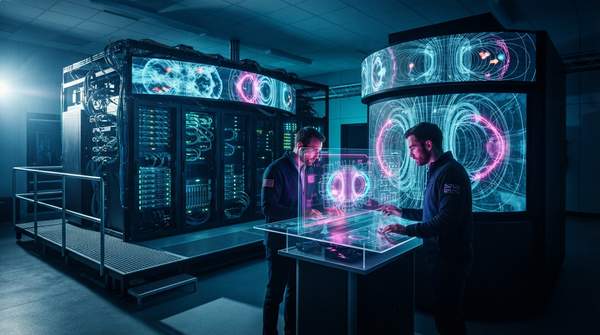
US and UK Link Fusion Supercomputers to Train Shared AI on Tokamak Data
The UK and US have linked their fusion supercomputing platforms, SUNRISE and STELLAR-AI, to train shared AI models on experimental tokamak data. This transatlantic partnership aims to accelerate the design of future fusion reactors like the UK's STEP Fusion and the US STAR reactor.

NASA's November 2026 Moon Base Awards: Three Systems That Will Carry a Sustained Lunar Presence
NASA announced significant awards on November 7, 2026, for its Moon Base near the lunar South Pole, focusing on three key commercial systems: surface mobility via the PROMISE rover, in-space transport through VADR task orders, and surface power and communications infrastructure.
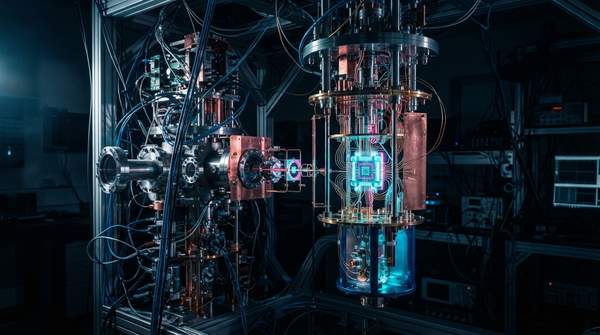
Quantum Nondemolition Measurement: Reading Quantum States Without Destroying Them
Quantum nondemolition (QND) measurement is a technique that allows scientists to measure a quantum system's property without disturbing or destroying it. This is vital for continuous monitoring in fields like gravitational-wave detection and quantum computing, where standard measurements would collapse the fragile quantum state.

PharmacyGo: A Look at Emerging Prescription Delivery Services in Florida
As the demand for convenient healthcare solutions grows, prescription delivery services are becoming increasingly vital. With home medication delivery now accounting for a significant portion of pharmacy sales in the U.S…

Why Post-Quantum Cryptography Replaces Factoring and Discrete Logs With Lattices, Codes and Hashes
Post-quantum cryptography (PQC) is essential because quantum computers threaten to break current public-key encryption systems like RSA and ECC. PQC replaces vulnerable mathematical foundations with new problems based on lattices, codes, and hashes, offering quantum resistance without requiring quantum hardware.

Piece by Piece: How NASA Is Buying Its Way to a Sustainable Moon Base
NASA is establishing a sustained presence on the Moon by contracting commercial companies for services and infrastructure, rather than building its own Moon base. This strategy, exemplified by the CLPS initiative and recent awards, aims to create a marketplace of lunar services to de-risk future human missions.

How Synthetic Biology Turns Microbes Into Factories for Chemicals, Biofuels and Bioplastics
Synthetic biology reprograms microbial metabolism to produce valuable chemicals, biofuels, and bioplastics from renewable resources, offering sustainable alternatives to petrochemicals. This is achieved through three core strategies: introducing new metabolic pathways, optimizing existing ones, and diversifying pathways to create novel compounds.

A Superinductor on a Standard Silicon Chip: How Quantum Motion Cut Qubit Sensor Footprint by 10,000 Times
Quantum Motion has developed an IC-native superinductor integrated directly into standard silicon chips, reducing qubit sensor footprints by 10,000 times. This breakthrough addresses a major scaling bottleneck for quantum computing by shrinking readout hardware to be comparable in size to qubits themselves.

Inside Simon Schell's Website Building Service: Fast, Privacy-First Local Web Design
In a global web development market valued at over USD 82.4 billion in 2026, small businesses face immense pressure to establish a meaningful online presence. For local enterprises in Germany, navigating this landscape ca…

How a Brain-Computer Interface Turns the Intention to Speak Into Audible Words
Speech brain-computer interfaces (BCIs) restore communication for individuals with paralysis by reading neural activity, decoding it into linguistic units, and synthesizing audible speech. This three-stage pipeline bypasses damaged neuromuscular pathways, enabling thought-to-voice conversion.

Ethics at the Neural Frontier: How to Evaluate Brain-Computer Interfaces Before They Scale
Brain-computer interfaces (BCIs) present significant ethical challenges, requiring careful evaluation before widespread adoption. This article outlines core principles like autonomy, privacy, and equity, and provides a framework for assessing BCI applications based on their purpose and invasiveness.
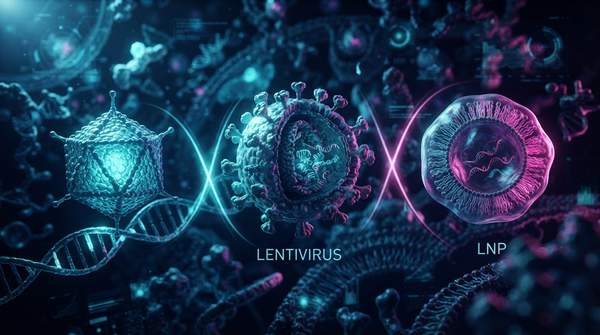
AAV vs. Lentivirus vs. LNP: How the Three Leading Gene Therapy Vectors Compare on Payload, Immunogenicity, and Persistence
Selecting the optimal gene therapy vector among AAV, lentivirus, and LNPs requires a strategic trade-off between payload capacity, immunogenicity, and desired expression duration. Each vector platform occupies a distinct niche based on its unique characteristics and therapeutic application.