Quantum computers need their own threat models because the assumptions classical cybersecurity rests on — discrete digital signals, tolerance of small errors, clear separation between hardware and software — simply do not hold for quantum machines. Today's noisy intermediate-scale quantum devices already run through cloud platforms and shared hardware, and Penn State researchers report that the most serious risks apply to these systems now, not to some future fault-tolerant machine. The security surface divides into three distinguishable layers: the physical device and its analog control signals, the logical quantum circuit, and the classical-quantum system interface. This guide explains why classical models fail at each layer and offers a framework security professionals can use to classify quantum threats.
The Quantum Security Paradigm Shift: Why Classical Models Fail
The core mismatch is physical. As an academic primer on quantum computing hardware security explains, classical chips are primarily logical artifacts: small errors can be tolerated or corrected through discretization. Quantum hardware is different. Its control signals are analog, and qubits are so sensitive to small variations in those signals that even minor alterations in control pulses can produce significant errors in quantum operations. Bit flips in the exponent and initial mantissa bits of a real amplitude have been shown to cause substantial deviations in quantum gate operations, with Total Variation Distance increases as high as roughly 200%.
The Penn State team, reporting through Matt Swayne at The Quantum Insider, frames the problem as one of design intent: quantum systems have largely been built with performance and reliability in mind, not adversarial threat models. "Quantum security is not a future problem waiting for fault-tolerant machines," they conclude — the serious risks apply to today's NISQ devices. The researchers also suggest some classical security concepts may need to be rethought rather than reused, because quantum mechanics introduces behaviors that do not map cleanly onto digital systems.
Industry analysis sharpens the point. Writing at Quantum Computing Report, Doug Finke argues there is a skills gap running in both directions: the people who understand quantum hardware rarely think like attackers, and attackers rarely understand the hardware. His analogy is instructive — when enterprise security needed a shared vocabulary, MITRE ATT&CK provided one. Quantum hardware, in his view, has reached the stage where it needs a comparable, defense-agnostic catalog of what can be done to the machine.
Vulnerabilities at the Physical/Device Layer
The first layer is the quantum processor itself: the qubits, the wiring, and the analog control pulses that drive them. Because qubits react to minute signal variations, an adversary who can perturb those signals — even slightly — can manipulate computation in ways that classical digital threat models cannot describe. The primer's finding on control-pulse bit flips illustrates the mechanism: what would be an ignorable analog imperfection elsewhere becomes a substantial operational deviation here.
The second physical vector is interference. The Penn State researchers single out crosstalk and other noise sources — external interference — that "may leak information or impede effective information transfer." Crosstalk is a sensitivity unique to current quantum hardware, and it cuts both ways: it degrades computation for legitimate users, and it can carry information about one part of a computation to another, creating a leakage channel that exists at the device level.
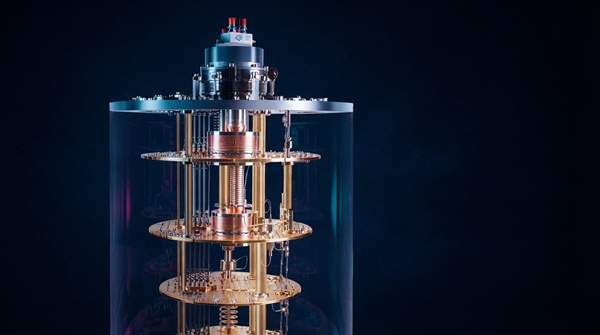
Marin Ivezic, writing at PostQuantum.com, points out that physical isolation of the qubits themselves is often illusory as a security boundary. The qubits may sit at 10 millikelvin inside a dilution refrigerator, but the electronics that drive them are a rack of FPGAs running firmware, and the calibration software is a Python application on a Linux server. In other words, the "isolated" quantum core is controlled by entirely classical, networked infrastructure — and that infrastructure is where physical-layer access actually happens.
Threats to the Logical Quantum Circuit Layer
The second layer concerns what runs on the hardware: quantum circuits, algorithms, and the intellectual property they encode. The primer documents a distinctive exposure here. In QAOA circuits, each edge of an underlying problem graph maps to a CNOT-rotation-CNOT gate sequence, meaning "one can infer the problem graph just by studying the circuit." Many Quadratic Unconstrained Binary Optimization problems fall into this category. The implication is direct: a quantum circuit is not merely executable code — its structure can disclose the commercial or strategic problem its owner is solving.
This inversion matters for threat modeling. In classical computing, compiled code rarely reveals the business question being answered; in these quantum algorithm families, the circuit's topology is a readable signature of the problem itself. Protecting that property is a circuit-level obligation, distinct from both physical hardening and network defense.
The Penn State researchers accordingly recommend that at the circuit level, "techniques like scrambling and information encoding must be used to protect the data built into the system." Scrambling obscures the mapping between circuit structure and underlying information, while encoding protects data embedded in the computation. Both are defenses that have no close classical analogue, because the vulnerability they address — structural IP leakage through circuit topology — is itself a quantum-specific artifact.
Security Risks at the Classical-Quantum System Interface
The third layer is where most practical exposure lives. Quantum computers require cryogenic temperatures and high vacuum, resources too specialized for personal ownership, so access flows through cloud platforms. As an analysis of quantum cloud security describes the pattern, a client designs and simulates circuits on a classical device, transmits them to quantum hardware as a job, receives the measurement output, and updates parameters — the process followed by hybrid algorithms such as VQE, QAOA, and quantum machine learning. That pipeline, the analysis warns, "introduces various novel attack exposures across orchestration layers and the classical-quantum interface," and recent research has demonstrated diverse threats in multi-tenant environments.
Finke's assessment is blunt about what this does to traditional assumptions. IBM, AWS Braket, Azure Quantum, Google, IonQ, and Quantinuum all operate on remote job submission over the internet. "A machine anyone can send a circuit to from a laptop is not air-gapped; it's one of the most reachable computing surfaces we've ever built," he writes. Even a genuinely isolated device gains limited protection, because an air gap only stops the remote intruder — and on shared hardware, an attacker rents legitimate time on the same chip as their target rather than breaching anything at all.
Ivezic adds a personnel dimension: the people who calibrate a quantum computer hold a level of system access with no classical analogue, and he documents espionage incidents targeting quantum research infrastructure as current operations, not future threats. At the system level, the Penn State researchers recommend compartmentalizing business data into groups, granting role-based access, and developing new software techniques to detect and fortify quantum programs against security threats.
A Layered Framework for Quantum Hardware Threat Modeling
Pulling these findings together produces a working diagnostic framework. For each layer, the model pairs the quantum property that makes the layer unusual with the attack vector that property enables, so an analyst can place any candidate threat in the stack and understand its relationship to both the quantum and classical components of the system.
| Threat layer | Unique quantum property or mechanism | Vulnerability or attack vector |
|---|---|---|
| Physical / device | Analog control signals and extreme sensitivity to external interference and noise — a fundamental characteristic of current quantum hardware | Crosstalk and noise can leak information or impede transfer; control-pulse bit flips cause substantial deviations in gate operations — areas requiring device-level mitigation |
| Circuit / logical | Circuit design can reveal underlying problem graphs — a characteristic of certain algorithm structures such as QAOA and QUBO problems | Structural IP leakage from circuit topology; the need for scrambling and information encoding implies exposure to circuit-level information extraction or alteration |
| System / interface | Remote job submission via classical devices, forming a hybrid classical-quantum architecture — the common operational model for quantum services | Novel attack exposures across orchestration, control, and measurement in multi-tenant environments; "air-gapped" assumptions insufficient — an expanded attack surface from interconnected systems |
| Cross-cutting: classical mismatch | Quantum systems are complex physical implementations of quantum mechanics, unlike classical chips where functionality is primarily logical | Traditional cybersecurity measures are not equipped for vulnerabilities arising from these properties; experts note some classical concepts may need rethinking |
Using the framework is a matter of asking where a candidate threat acts. An attacker perturbing calibration pulses belongs to the physical layer even though the intrusion may originate in classical software. A rival inferring a client's optimization problem from circuit structure is a circuit-layer threat regardless of how the circuit was obtained. A compromise of the job-submission pipeline is a system-layer exposure even though the quantum chip itself is untouched. The fourth row is the boundary condition: if a threat exploits the analog, physically-grounded nature of quantum control rather than a classical software flaw, classical defenses alone will not address it.
Two qualifications keep the model honest. Ivezic flags an open research question: whether the abstraction introduced by error correction in fault-tolerant systems provides security isolation — preventing a physical-layer side channel from leaking logical-level information — is unresolved, so the layers may not be as separable in future machines as the framework implies. And the framework is conceptual, not an exhaustive catalog: it organizes the documented vulnerability categories rather than enumerating every known attack.
Adopting a Quantum-Specific Security Posture
The decision the evidence supports is that security professionals must develop and implement dedicated threat models for quantum hardware, moving beyond classical cybersecurity paradigms. The measurable outcome to watch is the adoption rate of quantum-specific threat modeling frameworks and the integration of quantum vulnerability assessments into organizational security practices — indicators that this discipline is becoming an owned surface rather than an unowned one. The Penn State researchers call for a dedicated quantum security research community, benchmarks for secure compilation, and hardware designed with isolation and monitoring from the outset. Until those exist, the three-layer framework offers a defensible starting point: name the threat, place it in the stack, and check whether the defense in question actually addresses the quantum property that makes it possible.
Sources
- Penn State Researchers Report Quantum Hardware Exposes New Security Vulnerabilities — The Quantum Insider
- A Primer on Security of Quantum Computing Hardware — ARXIV
- Why Quantum Hardware Needs Its Own Threat Model - Quantum Computing Report
- Securing a Quantum Computer Deployment — PostQuantum.com
- ARXIV: analysis of quantum cloud security