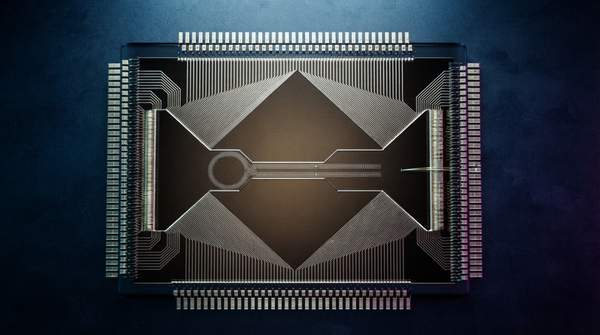
Quantum computers cannot scale not because the theory is unfinished, but because the stuff they are built from keeps getting in the way. Across every major qubit platform, the decisive engineering constraint is a materials problem: microscopic defects, unwanted nuclear spins, unstable surfaces, and fluctuating electromagnetic environments destroy the delicate quantum states that carry information. A 2013 MRS Bulletin review by James Eckstein and Jeremy Levy framed the issue plainly, describing the materials-related challenges of constructing "robust, long-lived quantum bits" as radically different from those of classical information technology. More than a decade later, those challenges still define the field.
The Quantum Computing Materials Problem
The core difficulty is that a qubit must hold a quantum state long enough to be useful, and how long it holds that state is set almost entirely by its physical embodiment. Recent surveys of the field point to sensitivity to errors, decoherence, scalability, and "the need for new materials and technologies" as the obstacles standing between laboratory demonstrations and real-world applications. Progress has been real—superconducting qubits with reduced error rates, trapped-ion qubits with high-fidelity gates—but each advance has depended on tightening control over material quality rather than on any change to the underlying physics.
What makes this a genuinely materials-science problem, rather than a routine engineering one, is that the relevant imperfections are often invisible to classical electronics. A defect that would never matter in a conventional transistor can dominate the behavior of a superconducting circuit, and a trace isotope that classical silicon devices ignore entirely can cap a spin qubit's lifetime. That is why the MRS Bulletin authors argued that quantum computing creates unique research opportunities for materials experts specifically.
Qubit Coherence: The Core Material Challenge
Coherence is the property that lets a qubit exist in a superposition of states, and it is lost—decoherence—when the qubit interacts with anything that effectively "measures" it. The sources of those interactions are overwhelmingly material: fluctuating charges and fields at imperfect interfaces, magnetic noise from nuclear spins, and microscopic defects embedded in the device itself. Every one of these is a property of the physical system hosting the qubit, which is why purity and stability are the recurring themes across platforms.
Eckstein and Levy identify a general axis along which all qubit technologies sit: coherence versus coupling. Systems that are hard to couple to their environment also experience less dephasing from environmental noise, giving them longer coherence times; systems that are easy to couple suffer the opposite. This trade-off is a general principle across qubit technologies, but it manifests differently in each material system, and managing it comes down to material selection and device architecture.