In a groundbreaking experiment, clusters containing over 7,000 atoms were observed to exist in multiple locations at once, their center-of-mass position delocalized by more than ten times their own diameter, according to Nature. The astonishing observation of clusters containing over 7,000 atoms existing in multiple locations at once, with their center-of-mass position delocalized by more than ten times their own diameter, shatters our classical understanding of reality, proving that even objects composed of thousands of particles can defy everyday expectations. It forces humanity to confront a universe where even "solid" objects are not what they seem, fundamentally challenging the bedrock of classical physics and common sense.
Our classical intuition demands that objects occupy a single state and interact locally. Yet, quantum particles can exist in multiple states simultaneously and influence each other instantaneously across vast distances. The profound tension between classical intuition and quantum particle behavior reveals a fundamental incompatibility between our everyday perception and the universe's true, awe-inspiring nature.
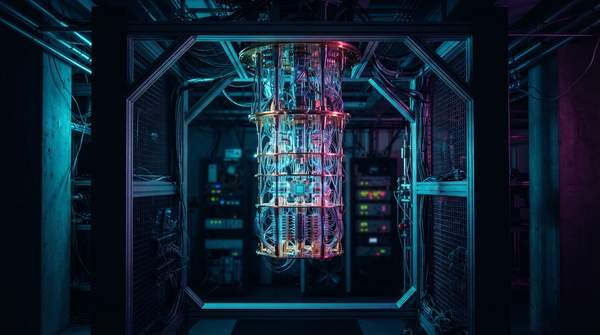
The harnessing of these counter-intuitive quantum phenomena, such as superposition and entanglement, is poised to unlock computational power far beyond classical limits. This will fundamentally reshape technology and scientific discovery.
What is Quantum Superposition?
Quantum superposition describes a particle's ability to exist in multiple states or positions simultaneously until an observation or measurement occurs. Imagine a coin spinning in the air; it is neither heads nor tails until it lands. A quantum particle exists in all possible states at once, not just one.
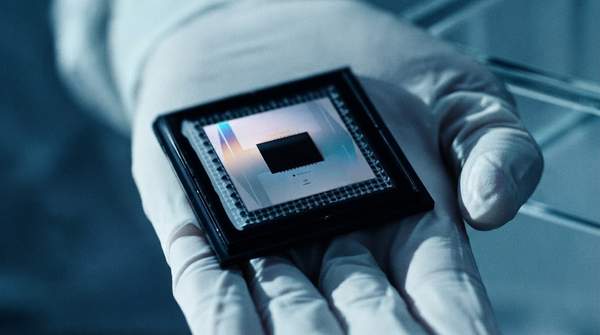
Quantum superposition underpins the very foundation of quantum computing. In a quantum computer, a quantum bit, or qubit, can represent both a 0 and a 1 at the same time. This differs from classical bits, which can only be a 0 or a 1. The simultaneous existence of qubits representing both a 0 and a 1 allows quantum systems to process vast amounts of information in parallel.
The ability of quantum particles to occupy a spectrum of possibilities until observed reveals a reality far more fluid than our daily experience. It implies that the very act of measurement actively collapses these multiple states into a single, definite outcome, a profound shift from classical determinism.
Beyond the Small: Macroscopic Quantum Effects
Experiments have pushed the limits of quantum mechanics, showing single atoms delocalized on the half-metre scale or for times longer than a minute, according to Nature. The groundbreaking observation of single atoms delocalized on the half-metre scale or for times longer than a minute proves quantum phenomena are not strictly confined to the microscopic realm. The observed macroscopicity in these tests exceeds that of all previous quantum experiments by an order of magnitude, hinting at a universe where quantum effects permeate far beyond our previous assumptions.
Findings from experiments showing single atoms delocalized on the half-metre scale or for times longer than a minute directly challenge the classical assumption that quantum "weirdness" dissipates at larger scales. Our classical perception of reality, it turns out, is merely a limited approximation, one that breaks down at scales larger than previously thought. The ability to maintain quantum states for extended periods and across significant distances opens thrilling new avenues for research, potentially leading to unprecedented technological advancements.
Such large-scale quantum effects confirm that the fundamental wave-like nature of matter persists even for objects approaching our everyday experience. Quantum principles, therefore, apply to objects far larger than previously imagined, fundamentally dismantling classical physics' view of a localized, deterministic reality and revealing a deeper, more interconnected universe.
Quantum Entanglement: Spooky Action at a Distance
A measurement of either position or momentum on a particular particle will allow the prediction, with certainty, of the outcome of a position measurement or momentum measurement, respectively, on the other particle, according to Plato. The profound phenomenon where a measurement of either position or momentum on a particular particle allows the prediction, with certainty, of the outcome of a position measurement or momentum measurement, respectively, on the other particle, known as quantum entanglement, links particles in such an intimate way that if something happens to one, it instantaneously affects all the others with which it's entangled, as explained by NASA Science. It's as if these particles share a secret, cosmic bond, defying conventional notions of space and time.
The intrinsic connection of quantum entanglement means measuring one entangled particle instantly reveals information about its partner, regardless of the distance separating them. The seemingly instantaneous influence of measuring one entangled particle instantly revealing information about its partner directly conflicts with Einstein's theory of special relativity. Special relativity postulates that nothing can travel faster than the speed of light. The conflict between instantaneous influence and special relativity suggests either a deeper, non-local connection that bypasses spatial separation or a fundamental misunderstanding of causality itself.
The persistent conflict between quantum entanglement's instantaneous influence and Einstein's speed-of-light limit suggests that our current models of information transfer and causality are profoundly incomplete. The persistent conflict between quantum entanglement's instantaneous influence and Einstein's speed-of-light limit hints at a deeper, non-local interconnectedness of the universe, a connection that could revolutionize computing, communication, and our very understanding of reality itself.
The Quantum Leap: From Principles to Computing
The University of Maryland, in collaboration with NIST, established the Joint Quantum Institute and the Joint Center for Quantum Information and Computer Science, according to Terp Magazine - University of Maryland. The academic and governmental collaborations between the University of Maryland and NIST, which established the Joint Quantum Institute and the Joint Center for Quantum Information and Computer Science, underscore a focused, global effort to rapidly advance quantum research. Such institutions are absolutely crucial for developing the theoretical and practical foundations of quantum computing, paving the way for future breakthroughs.
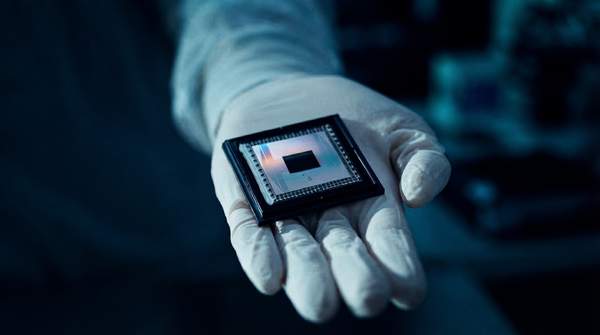
Beyond academia, industry leaders are also making significant strides. Microsoft is pursuing topological quantum computing, while Chris Monroe's team uses the trapped ion method with lasers and vacuum tubes. Diverse, cutting-edge approaches, such as Microsoft's pursuit of topological quantum computing and Chris Monroe's team's use of the trapped ion method with lasers and vacuum tubes, reflect the intense global race to harness quantum principles for computational breakthroughs. The ultimate goal: to build machines capable of performing calculations far beyond the capabilities of any classical computer, solving problems once deemed intractable.
The ability of qubits to exist in superposition and become entangled allows quantum computers to explore multiple solutions simultaneously. This parallel processing capability holds immense promise for tackling complex problems, from accelerating drug discovery and revolutionizing materials science to breaking current cryptographic barriers. The very architecture of quantum computing promises to unlock insights previously unimaginable, fundamentally reshaping our technological landscape.
Common Questions About Quantum Weirdness
What is the difference between superposition and entanglement?
Quantum superposition refers to a single particle existing in multiple states at once, like a spinning coin. Entanglement, however, describes a deep connection between two or more particles, where their fates are intrinsically linked. Measuring one instantly affects the others, even across vast distances, demonstrating a non-local correlation.
Does matter-wave interference extend to biological systems?
Yes, matter-wave interference has been observed in complex molecules, including fullerene diffraction and interference with biomolecules, according to Nature. The observation of matter-wave interference in complex molecules, including fullerene diffraction and interference with biomolecules, suggests that even the building blocks of life exhibit inherent wave-like properties. The exhibition of inherent wave-like properties by even the building blocks of life blurs the line between discrete particles and continuous fields.
How do quantum principles challenge classical physics?
Quantum principles directly contradict classical physics' demands for a localized, deterministic reality. While classical physics expects objects to occupy a single state and interact locally, quantum particles shatter this notion, existing in multiple states and influencing each other instantaneously across vast distances. The profound divergence between quantum principles and classical physics forces a complete reevaluation of our fundamental understanding of matter, energy, and causality itself.
The Future is Quantum
If current experimental momentum continues, the next decade will likely see quantum phenomena, from delocalized atomic clusters to entangled qubits, transition from laboratory marvels into foundational technologies, fundamentally reshaping computing, communication, and our very perception of the universe.