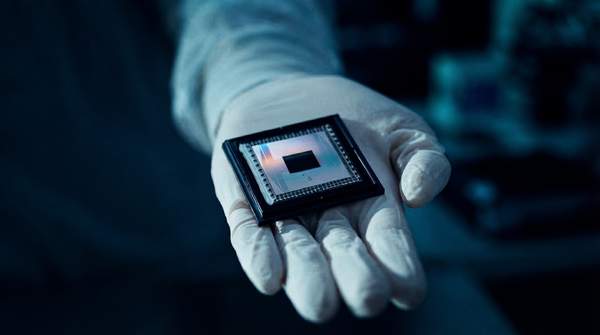
In a monumental leap bringing the future of computing into today's enterprise, Oracle will physically install Quantinuum's 98-physical-qubit Helios quantum computer directly inside a US Oracle Cloud Infrastructure AI data centre, according to The Next Web. Oracle will not just offer quantum services, but deeply embed Quantinuum's cutting-edge hardware within its OCI facilities. The partnership is a strategic masterstroke, designed to fling open the doors of quantum computing to a vast, mainstream enterprise user base.
For too long, quantum computing has remained a specialized, research-driven frontier, accessible only to a select few. Yet, this groundbreaking partnership shatters that paradigm, making a world-leading quantum machine directly available to mainstream enterprise cloud users. Oracle isn't merely hosting; it will sell access to Quantinuum's Helios quantum computer as a fully managed OCI service, seamlessly integrating it into its powerful existing cloud offerings.
The barrier to entry for exploring practical quantum applications is now dramatically lowered, promising to ignite an explosion of hybrid quantum-classical solutions across every conceivable industry. The direct integration of the Quantinuum Helios quantum computer into Oracle OCI capabilities by 2026 isn't just an upgrade; it's a high-stakes, visionary gamble by Oracle to seize an undeniable first-mover advantage in the quantum era.
Helios: The Quantum Powerhouse Arriving at OCI
- Quantinuum's Helios is a 98-physical-qubit trapped-ion system, commercially launched in November 2025, boasting an average two-qubit gate fidelity of 99.921%, according to The Quantum Insider and Japan Wire by Kyodo News.
- OCI customers will gain direct access to Quantinuum's Helios, hailed as the most accurate commercial quantum computer globally, according to The Quantum Insider.
- This 98-physical-qubit trapped-ion system has already demonstrated its prowess, used in demonstrations involving 48 logical qubits, according to quantinuum.

Helios stands as a marvel of quantum engineering: its impressive 98-physical-qubit count, coupled with an astonishing 99.921% two-qubit gate fidelity and proven logical qubit capabilities, positions it as an unparalleled instrument for conquering the most formidable computational challenges. Now, this powerhouse is within reach via OCI. While its full commercial launch is set for November 2025, the promise of direct access for OCI customers hints at an even earlier operational availability within Oracle's cloud environment, accelerating the quantum revolution beyond initial expectations.
Transforming Quantum Access for Oracle Customers
OCI customers will command direct access to Quantinuum's Helios quantum computer through OCI's dedicated quantum service. The offering is integrated alongside OCI's formidable high-performance computing (HPC) and GPU infrastructure, according to quantinuum. Due to this profound integration, users can unleash the combined might of classical supercomputing with cutting-edge quantum capabilities for their most complex workloads. Crucially, Helios will reside within a U.S.-based Oracle AI data center, a strategic decision ensuring optimal latency and robust data sovereignty, vital for sensitive enterprise applications, according to cio.
The deep integration within OCI's existing ecosystem radically simplifies access and forges seamless hybrid quantum-classical workflows. Such an environment is not merely beneficial; it is absolutely essential for the practical development of quantum applications, empowering enterprises to experiment, innovate, and build transformative solutions with unprecedented ease. The availability of Helios as a managed service obliterates much of the operational burden, allowing users to focus purely on discovery and results.
Oracle's Bold Gambit in Hybrid Computing
Quantinuum will deploy its Helios quantum computer directly into US Oracle Cloud Infrastructure data centers, specifically for hybrid quantum and AI workloads, according to constellationr. The physical embedding fundamentally differentiates Oracle's strategy from competitors who offer only remote access to quantum machines housed elsewhere. Oracle's decision to physically embed Quantinuum's "most accurate commercial quantum computer globally" directly into its OCI AI data centers isn't merely a signal; it's a declaration of a profound strategic pivot, reshaping the very landscape of cloud infrastructure.
Oracle is unequivocally established as a pioneer, committed to delivering a comprehensive, integrated platform for the next generation of computing. By seamlessly fusing quantum, AI, and HPC capabilities, Oracle positions itself to tackle humanity's most demanding computational problems. The integration doesn't just redefine cloud infrastructure; it catapults quantum computing from a theoretical pursuit into a tangible, indispensable enterprise capability.
The Quantum Horizon: Cloud-Powered Innovation
The immediate availability of such a leading quantum computer on a major cloud platform sets an electrifying precedent, destined to accelerate quantum application development at an unprecedented pace. Broader enterprise adoption will inevitably be sparked, pushing the very boundaries of what is computationally possible. Oracle isn't just providing quantum access; it is actively engineering a revolutionary hybrid quantum-classical computing environment, a true testament to its visionary leadership.
The strategic positioning aims to capture an early, dominant market share in the most complex AI and simulation workloads. It could very well establish a new industry standard, forcing competitors to rethink their own quantum strategies. Oracle's unwavering commitment to integrate a system with a "November 2025" commercial launch date is a significant, long-term bet on quantum's near-term commercial viability, potentially compelling rivals to dramatically accelerate their own quantum integration efforts to avoid being left behind in the fierce race for hybrid computing dominance by 2026.
Frequently Asked Questions
What are the benefits of integrating quantum computers with cloud platforms?
Integrating quantum computers with cloud platforms unlocks unparalleled access for enterprises, eliminating the need for specialized on-premise hardware and esoteric expertise. It enables seamless hybrid workflows, masterfully combining quantum processors with classical supercomputers and AI accelerators to solve problems of immense complexity. The approach democratizes access to advanced capabilities, dramatically accelerating research and development far beyond the confines of dedicated quantum labs, fostering a new era of innovation.
What advancements has Quantinuum made in quantum computing in 2026?
Beyond the groundbreaking Helios system, Quantinuum continues to forge ahead, developing sophisticated quantum software tools, including advanced compilers and algorithms meticulously tailored for specific industry applications. They have also relentlessly focused on refining error correction techniques, which are absolutely critical for scaling quantum systems beyond their current experimental stages. Relentless efforts aim to dramatically enhance the reliability and practical utility of quantum computation for real-world, impactful problems.
What types of problems can hybrid quantum-classical computing address?
Hybrid quantum-classical computing stands poised to revolutionize fields from optimization problems in logistics and finance to intricate molecular simulations for drug discovery and materials science, and even complex machine learning tasks. By intelligently offloading computationally intensive segments of a problem to quantum processors while leveraging classical systems for control and data processing, these hybrid systems hold the potential to crack problems currently deemed intractable for classical computers alone. Such transformative applications are expected to proliferate rapidly by Q4 2026, ushering in a new age of computational power.