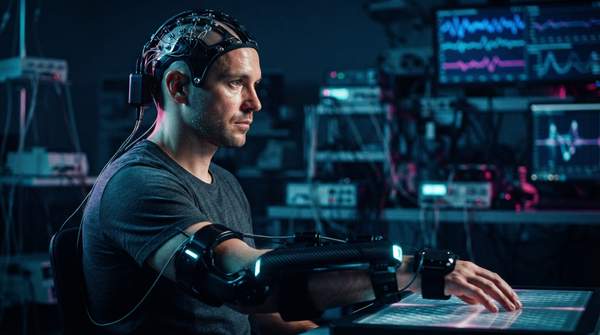
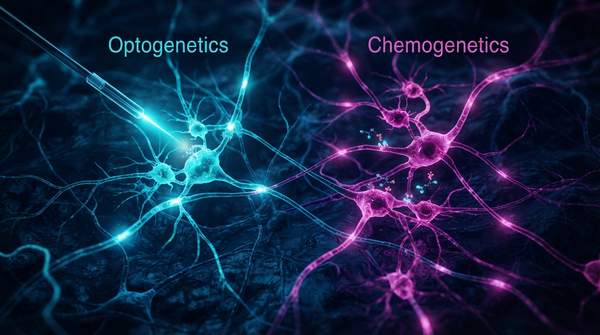
A five-day brain treatment promising an 85.7% response rate for cognitive improvement can cost up to $36,000, creating an exclusive tier of mental enhancement. A rapid, high-impact approach to boosting brain function suggests that superior cognitive abilities are increasingly becoming a luxury, accessible primarily to those with significant financial resources.
Neurotechnologies are offering increasingly powerful cognitive enhancements, but the cost of these cutting-edge treatments is creating a significant barrier to equitable access.
Based on the current trajectory of high-cost, high-efficacy treatments and ambitious invasive technologies, a future where cognitive enhancement is a luxury good, exacerbating societal inequalities, appears likely.
The Stanford Accelerated Intelligent Neuromodulation Therapy (SAINT™) exemplifies this divide. Its rapid, high-impact approach to boosting brain function, while highly effective, sets a precedent for exclusive access to superior cognitive function due to its prohibitive cost.
1. Stanford Accelerated Intelligent Neuromodulation Therapy (SAINT™)
Best for: Individuals seeking rapid, highly effective cognitive improvement, particularly for mood disorders or cognitive decline where speed and impact are paramount.
SAINT™ is an intensive form of transcranial magnetic stimulation (TMS) that delivers multiple sessions daily over a short period. It targets specific brain networks to achieve significant and swift cognitive and mood enhancements. Despite its impressive efficacy, the high cost of SAINT™ suggests a future where peak cognitive performance is a luxury, accessible only to the affluent.
Strengths: Exceptional 85.7% response rate and 78.6% remission rate; rapid treatment duration of 5 days. | Limitations: High cost, requiring substantial financial investment. | Price: $30,000–$36,000.
2. Memory prosthesis (Professor Ted Berger's work)
Best for: Individuals with damaged hippocampal functions or those seeking advanced memory augmentation through direct neural interface.
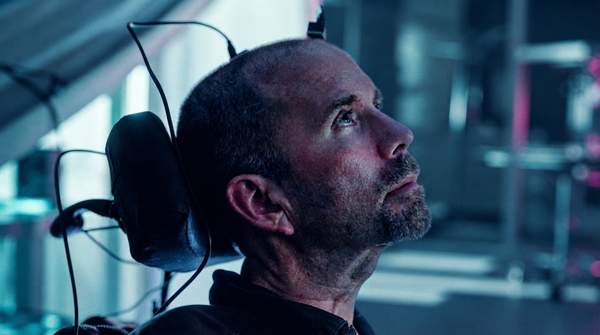
Professor Ted Berger's team developed a computer implanted in the brain designed to replace damaged hippocampal functions, with preliminary results observed in human subjects, as noted by The Guardian. This technology aims for direct, functional restoration and enhancement of memory capabilities. Such direct neural interface technology pushes the boundaries of human identity and what it means to naturally remember.
Strengths: Direct restoration of memory function; potential for significant cognitive improvement in specific areas. | Limitations: Invasive surgical procedure; early stage of development for widespread application. | Price: Not publicly available; expected to be extremely high.
3. Neuralink
Best for: Early adopters willing to undergo invasive procedures for ultra-high bandwidth brain-machine interfaces, aiming for comprehensive cognitive enhancement and direct computer interaction.
Neuralink seeks to connect computers directly to human brains using 'neural lace' technology, aiming for bi-directional cognitive enhancement in healthy individuals, including improved intelligence and memory, according to The Guardian and PMC. This ambitious project envisions a future of human-AI symbiosis. However, the ethical implications of such intimate brain-computer integration, particularly regarding autonomy and control, remain largely unexplored.
Strengths: Potential for profound, multi-faceted cognitive enhancement; direct brain-computer interaction. | Limitations: Highly invasive; significant ethical and safety concerns; currently in early human trials with limited enhancement data. | Price: Not publicly available; expected to be extremely high.
4. Brain-Computer Interfaces (BCIs) (general for enhancement)
Best for: Researchers and pioneering individuals exploring the long-term potential of direct neural communication for various forms of cognitive augmentation.
Existing BCIs primarily enable one-directional motor control and communication for individuals with brain injuries. However, the vision extends to bi-directional interfaces for cognitive enhancement in healthy individuals, aiming for improved intelligence and memory, as detailed by PMC and The Guardian. This broad category encompasses various technologies for direct brain interaction. As BCIs evolve beyond therapeutic uses, they could fundamentally redefine human communication, learning, and even consciousness.
Strengths: Foundational technology for future cognitive augmentation; wide range of potential applications. | Limitations: Most current applications are therapeutic, not enhancing; invasive procedures often required. | Price: Highly variable, from research-grade to future commercial products.
5. Focused Ultrasound (FUS)
Best for: Individuals exploring non-invasive methods for localized brain modulation, potentially for targeted cognitive boosts or therapeutic applications.
Focused Ultrasound (FUS) is recognized as a physical strategy with the potential to boost mental abilities, according to PMC. It uses sound waves to precisely target and modulate brain activity without surgical intervention. A non-invasive approach offers a promising, less intrusive pathway to cognitive enhancement, potentially broadening access if development costs can be contained.
Strengths: Non-invasive; precise targeting of brain regions; potential for focused enhancement. | Limitations: Still largely experimental for cognitive enhancement; long-term effects are being studied. | Price: Not widely commercialized for enhancement; research costs vary.
Efficacy at a Glance: Standard vs. Advanced Protocols
| Technology | Response Rate | Remission Rate | Treatment Duration | Estimated Cost |
|---|---|---|---|---|
| Repetitive TMS (rTMS) | Approximately 50% | 30% | 20–36 sessions over 4–6 weeks | $6,000–$15,000 |
| SAINT™ | 85.7% | 78.6% | 5 days | $30,000–$36,000 |
A stark difference in efficacy and cost between standard rTMS and SAINT™ reveals a clear performance gap, where superior cognitive outcomes often correlate with significantly higher price points in neurotechnology.
If the current trajectory of high-cost, high-efficacy neurotechnologies persists, a future where advanced cognitive enhancement remains a luxury good, exacerbating societal inequalities and creating a new class of augmented humans, appears likely.
Your Questions Answered: Navigating the Enhancement Landscape
What are the ethical considerations of cognitive enhancement neurotech?
The primary ethical consideration centers on equitable access. As advanced neurotechnologies create a class of highly cognitively enhanced individuals, questions arise about fairness, social mobility, and the potential for a two-tiered society where superior brain function is reserved for the wealthy. Concerns about personal autonomy and the definition of 'normal' human capabilities also come into play.
How do neurotechnologies improve memory and focus?
Neurotechnologies enhance memory and focus through various mechanisms, including modulating neural oscillations, strengthening synaptic connections, or directly stimulating brain regions associated with these functions. For instance, TMS protocols like SAINT™ use magnetic pulses to excite or inhibit specific brain circuits, thereby optimizing their activity for improved cognitive performance. Invasive BCIs aim for even more direct control by encoding or decoding neural signals.
Are there safe and effective cognitive enhancement technologies available in 2026?
Yes, some technologies show both safety and effectiveness, though further research and development are ongoing.