Artificial intelligence and robotics are accelerating drug discovery by taking over the three activities that most constrain it: testing compounds at scale, running repetitive experiments, and keeping data flowing between steps. Robotic liquid handlers can now execute tens of thousands of assays per day around the clock, something manual workflows could not achieve. At Sanofi, a robotics platform called Solutron has absorbed solubility experiments that would otherwise consume enormous amounts of scientist time. And AI is moving from a passive analysis tool into an active orchestrator of the laboratory itself, pointing toward what researchers call the self-driving lab.
The Challenge of Traditional Drug Discovery
The starting problem is one of friction. Modern laboratories generate increasingly complex datasets and rely on growing numbers of instruments, yet disconnected systems and manual processes can hinder the flow of information between experimental steps, as an explainer from Drug Discovery News puts it. When information stalls, the context attached to data — how a sample was handled, under what conditions a result was produced — becomes harder to preserve.
The scientific headwinds compound the technical ones. An article by Vijay Kumar Malesu on News-Medical notes that advancement in drug discovery has been limited by a lack of complete data, combined with biological complexity and stringent regulatory requirements, all of which underscore the urgent need for more efficient solutions that improve the speed, affordability, and success rate of the process.
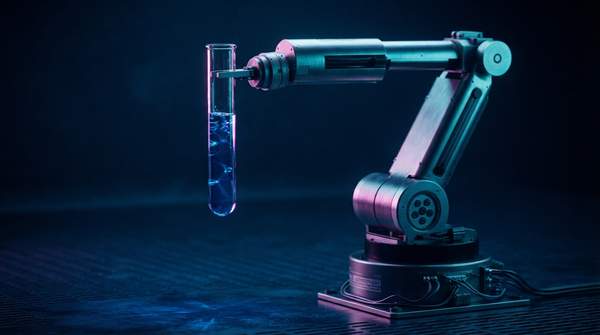
Robotics has already reshaped daily practice in response. Automated platforms now handle tasks such as liquid handling and high-throughput screening (HTS), and advanced robotic systems enable precise, rapid screening of vast compound libraries — significantly enhancing efficiency, consistency, and scalability in the early hunt for promising molecules.
Introducing the Self-Driving Lab: Autonomous Discovery
The self-driving lab is the model these pieces are converging toward: a closed loop in which AI directs experiments, robots execute them, and the resulting data trains the AI to design better experiments. Researchers building a whole-lab orchestration and scheduling system for such labs emphasize that this automation is not just about increasing throughput. It is about maintaining a high degree of precision and reproducibility, which they describe as critical factors in drug development.
In that model, artificial intelligence plays a pivotal role in orchestrating laboratory activities and optimizing resource allocation — deciding what runs, when, and on which instrument. The loop is already visible in industrial practice. Sanofi reports that its Solutron platform methodically generates data that feeds back into AI models, enabling continuous learning. Each automated experiment makes the next round of decisions better informed.
Key AI and Robotic Technologies in Action
On the screening floor, the workhorse is automation. BellBrook Labs, a drug-discovery tools company, describes platforms built from robotic pipetting systems, automated incubators, and integrated data-capture software that enable 24/7 screening with minimal human input. The scale is concrete: a single automated liquid handler can execute tens of thousands of assays per day, something the company says was previously impossible in manual workflows.
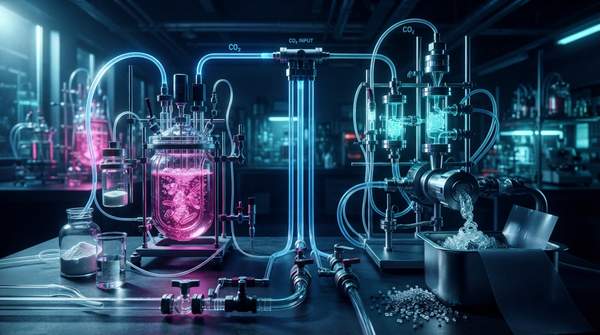
Further along the pipeline, Sanofi's Solutron illustrates what robotics does for repetitive experimental work. Across a portfolio of new drug candidates, manually performing all the required solubility experiments would be incredibly time- and resource-intensive, the company explains. Solutron has taken over that work, accelerating process development with precision and reproducibility. As Sanofi's Walker puts it: "By shifting repetitive, manual tasks to digital and robotics platforms like Solutron, we're empowering scientists to work at the leading edge of innovation – doing things we can't automate."
AI also operates on the analysis side of the pipeline. According to BellBrook Labs, AI models can integrate animal data, organoid studies, and prior clinical trials to predict human outcomes more reliably — reducing animal use, speeding regulatory review, and identifying safety risks earlier. These are the named examples this article covers, not an exhaustive catalog of the field's tools.
Automated vs. Traditional Lab Processes in Drug Discovery
Setting descriptions of manual tasks beside their automated counterparts isolates exactly where the efficiency gains come from — in speed, in scale, and in the reproducibility of the data each step produces.
| Process Stage | Traditional Method | Automated Method | Key Benefit |
|---|---|---|---|
| Early-stage screening (compound testing) | Manual workflows that could not approach today's screening volumes | Robotic pipetting systems, automated incubators, and data-capture software run 24/7 screening; a single automated liquid handler executes tens of thousands of assays per day | Vast compound libraries screened precisely and rapidly, with minimal human input |
| Experimentation (solubility testing) | Manual solubility experiments across a portfolio of candidates, which Sanofi describes as incredibly time- and resource-intensive | Sanofi's Solutron robotics platform performs the experiments, accelerating process development with precision and reproducibility | Repetitive work shifts to machines; scientists focus on what cannot be automated |
| Data generation | Disconnected systems and manual processes hinder the flow of information and data context | Platforms generate data methodically and feed it back into AI models for continuous learning | More reproducible data at scale, supporting evidence-driven decisions |
The pattern across the table is consistent. Automation's first contribution is raw speed and scale at the screening stage; its second is reliability of execution, since a robotic platform performs an experiment the same way every time; its third is continuity, because data captured automatically keeps its context and can flow directly into AI models rather than stalling between disconnected systems.
BellBrook Labs frames the cumulative effect as a change in how discovery itself proceeds: "AI and automation are shifting discovery from intuition-driven to evidence-driven innovation." The same source is careful to add that AI and automation are not replacing human innovation in drug discovery — they are amplifying it, and biochemical assays remain the backbone of the process.
Embracing Autonomous Labs for Future Discoveries
For researchers and organizations weighing the shift, the evidence points to a strategic integration of AI and robotics rather than a wholesale replacement of the scientist. The practical path is to automate the repetitive and high-volume stages — screening, solubility and process experiments, data capture — while directing human expertise toward the design and judgment work that machines cannot do, exactly the division of labor Sanofi describes around Solutron.
The measurable indicator to watch is increased adoption of AI-driven platforms like AlphaFold and robotic systems such as Sanofi's Solutron, evidenced by published research and industry reports detailing reduced experimental timelines and improved data reproducibility. As more laboratories publish results showing automated platforms executing assays at scales manual workflows cannot reach, and closed loops in which experimental data continuously trains the AI that directs the next experiment, the self-driving lab moves from concept to trackable reality.