
All Stories
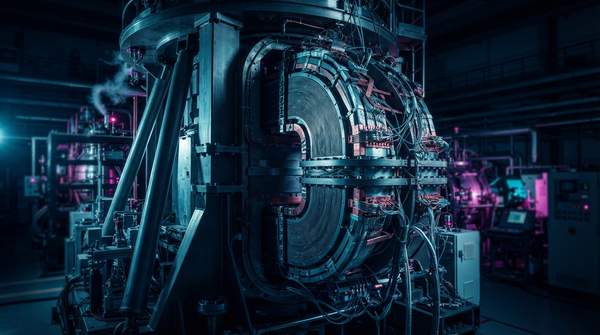
Why High-Temperature Superconducting Magnets Are Fusion's Make-or-Break Engineering Problem
High-temperature superconducting (HTS) magnets are essential for enabling compact, economically viable fusion power plants by generating stronger magnetic fields. However, engineers face significant challenges in material science, electro-mechanical forces, and system integration to translate this potential into functional reactor hardware.

Explainable AI: The Four Principles That Turn Black Boxes Into Accountable Systems
Explainable AI (XAI) makes complex AI systems understandable through four key principles: transparency, interpretability, justifyability, and robustness. Adhering to these principles is essential for building trust, mitigating risk, and meeting evolving regulatory compliance frameworks.
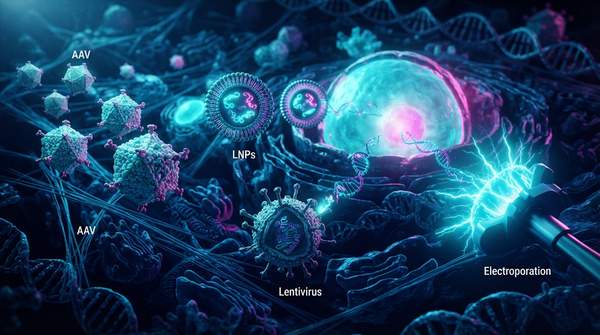
Comparing Advanced CRISPR-Cas9 Delivery Systems: Specificity, Immunogenicity, and Clinical Progress
The effectiveness and safety of CRISPR-Cas9 gene editing therapies depend critically on delivery systems. This article compares viral vectors like AAVs and lentiviruses, non-viral options like LNPs, and ex vivo methods like electroporation, evaluating their specificity, immunogenicity, and clinical progress.
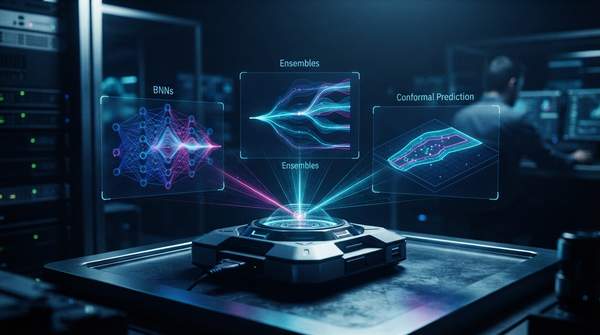
Comparing AI Uncertainty Quantification Techniques for High-Stakes Applications
AI models in critical applications need to communicate uncertainty reliably. This article compares Bayesian Neural Networks, Ensemble Methods, and Conformal Prediction to aid in selecting the right uncertainty quantification technique for high-stakes AI.

Is the Webster Technique at Advanced Health Chiropractic the Right Choice for Your Pregnancy?
The Webster Technique is a specialized chiropractic adjustment focused on restoring proper pelvic balance and function during pregnancy, aiming to create a better environment for the baby and alleviate maternal discomfort. Advanced Health Chiropractic offers this technique as a cornerstone of their prenatal care in Reno.

Comparing Critical Technologies for Long-Duration Human Mars Missions
This article analyzes critical technologies for long-duration human Mars missions, evaluating their readiness levels (TRL), resource demands, and impact on crew safety and mission feasibility. It highlights key areas like advanced propulsion, life support, ISRU, and power systems, guiding investment for future exploration.

Navigating Global AI Governance: A Comparison of the EU AI Act, US NIST AI RMF, and China's Regulations
This article compares the distinct global approaches to AI governance, detailing the EU AI Act's binding legal framework, the US NIST AI RMF's voluntary risk management guidance, and China's mandatory standards and pre-approval system. Understanding these differences is crucial for navigating international AI compliance and responsible development.
How Synthetic Biosensors Turn Pollution Into a Detectable Signal
Synthetic biology is revolutionizing environmental monitoring with engineered biosensors that detect pollutants and translate them into measurable signals. These programmable biological systems offer real-time, on-site analysis for environmental protection.
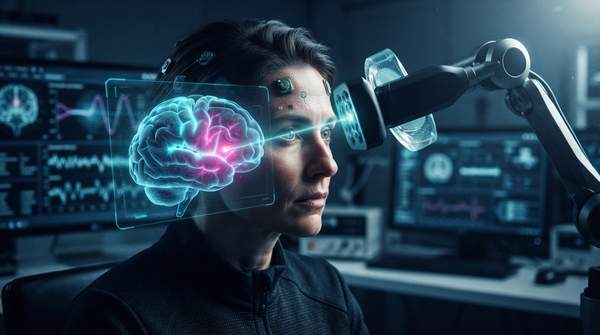
Beyond EEG: How Ultrasound Aims for Pinpoint Precision in Brain-Computer Interfaces
Transcranial focused ultrasound (tFUS) is emerging as a non-invasive technology for brain-computer interfaces (BCIs), offering unprecedented millimeter-scale spatial resolution. This advancement aims to bridge the gap between precision and safety, potentially enabling more accurate BCI control without surgical implantation.

Why So Many Miamians Are Switching to Smile4Life Dental for Restorative Dentistry in 2026
Smile4Life Dental in Miami is gaining popularity for restorative dentistry due to its focus on clinical excellence and integration of AI-powered diagnostic tools. They utilize advanced technology like AI analysis of digital X-rays and 3D CBCT scans for precise diagnosis and predictable outcomes in complex procedures.

The Hardware That Built AI: From CPUs to Specialized Accelerators
The evolution of AI hardware has progressed from general-purpose CPUs to massively parallel GPUs and specialized accelerators, driven by the escalating computational demands of AI models. This shift has fundamentally shaped AI capabilities and infrastructure, with continued specialization and scale defining its future.

Essential Technologies for NASA's StarBurst Gamma-Ray Mission
Imagine a satellite weighing just 250 kg, yet boasting over 500% the effective gamma-ray detection area of its colossal predecessor, the Fermi Gamma-ray Burst Monitor.

Superconductor magnets tested for 2026 fusion reactors
Existing superconductor magnets designed for fusion reactors, like those undergoing radiation tests in 2026, often become brittle in a reactor's intense high-radiation environment.

4 Emerging Neurotechnologies for Brain Health & Resilience
Despite a surge in innovation, nearly 80% of emerging neurotechnologies for brain health and resilience remain years away from FDA approval, most still in early developmental stages.

Why N52 Magnets Matter in the Best Magnetic Golf Towel Systems: Aiming Fluid Golf’s Magna-Anchor™ Explained
Aiming Fluid Golf's Magna-Anchor™ magnetic golf towel uses an N52-grade neodymium magnet system to address real-round retention challenges posed by vibrations, sliding forces, and movement during a game. The system focuses on making towel access more reliable and improving the overall cleaning routine, rather than just raw magnet strength.

MGE and Realta Fusion Partner on 200MW Wisconsin Fusion Plant
A Madison utility is directly investing in a nuclear fusion startup that recently powered a lightbulb with direct energy conversion, aiming to build a 200-megawatt plant capable of powering 150,000 ho

NASA Roman Telescope to Spot Exoplanets, Probe Dark Energy
NASA's Nancy Grace Roman Space Telescope is projected to discover as many as 200,000 potential planets beyond the Solar System, a number that would multiply humanity's known exoplanet count by over 30

Physicians Prioritize AI for Admin Relief
A deep convolutional neural network (DCNN) model achieved performance on par with 21 board-certified dermatologists in classifying skin cancers, according to PMC .

NASA astronaut Mike Fincke retires following medical evacuation
Just weeks after piloting a mission that returned in January, NASA astronaut Mike Fincke was medically evacuated from the International Space Station on January 7, 2025.

When Cosmique Labs Small-Batch Production Makes Sense For Cosmetic Brands
Small-batch production offers cosmetic brands a controlled step between product development and broader manufacturing, ideal for promising products not yet ready for large-scale commitment. It helps validate product performance, packaging, and formulation before significant investment.

Shamonda Virus Explained: A Livestock Pathogen With a Newly Confirmed, Likely Very Low Risk to Humans
Shamonda virus, an insect-borne orthobunyavirus affecting livestock, has had its first confirmed human case in France. While the risk to the general public remains low, the event highlights the potential for transmission and necessitates ongoing surveillance.

PHP2Shell Explained: The Core-Language RCE That Puts Most of the Web at Risk
PHP2Shell, a critical vulnerability affecting nearly all PHP versions since 5.4, allows unauthenticated remote code execution and memory disclosure. This core-language flaw, rated CVSS v4.0 9.2, necessitates immediate patching or mitigation for affected web servers.

Quantum Annealing vs. Gate-Based Quantum Computing: Which Paradigm Fits Your Problem?
Quantum annealing and gate-based quantum computing are distinct paradigms, each suited for different types of problems. Quantum annealing excels at optimization and sampling by finding lowest-energy configurations, while gate-based computing offers universal computation for algorithms like Shor's.
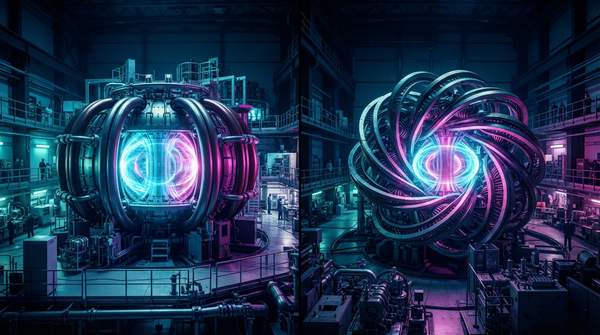
Fusion's Fork in the Road: Comparing the UK's Spherical Tokamak with Type One's Stellarator
The UK's spherical tokamak (STEP project) and Type One Energy's stellarator represent two distinct pathways to achieving commercially viable, steady-state fusion power. Both designs tackle the critical challenge of continuous operation but through fundamentally different engineering and physics approaches.