What Are Topological Qubits and Why Are They Key for Quantum Computing?

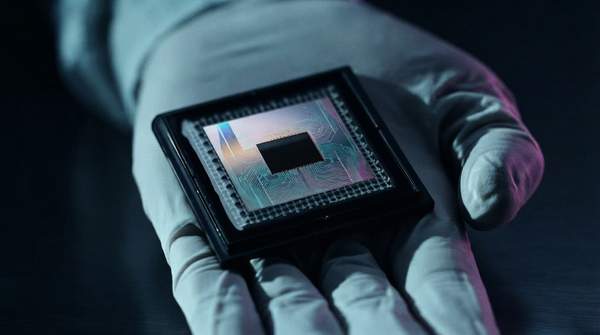
Microsoft and UC Santa Barbara physicists recently unveiled an eight-qubit topological quantum processor, a first-of-its-kind achievement that heralds a new era of stable quantum computing.

DK
Daron Krikorian

May 19, 2026 · 5 min read

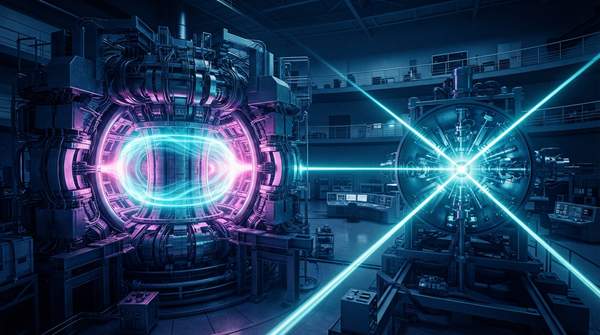
Abstract visualization of a topological quantum processor with glowing energy and crystalline structures, representing stable quantum computing.

Microsoft and UC Santa Barbara physicists recently unveiled an eight-qubit topological quantum processor, a first-of-its-kind achievement that heralds a new era of stable quantum computing. This breakthrough pushes the boundaries of what's possible, drawing us closer to practical quantum machines capable of tackling humanity's most complex problems. This monumental step forward, especially when considering the landscape of quantum computing in 2026, reveals the profound significance of this new technology.

Quantum information, by its very nature, is incredibly fragile, constantly threatened by environmental interference. However, topological qubits are designed with a revolutionary approach, aiming to store this delicate information with exceptional, inherent stability.

Based on the inherent stability and error robustness of topological qubits, the development of practical, scalable quantum computers appears more feasible, potentially shifting the timeline for widespread quantum adoption.

What Makes Topological Qubits Different?

Microsoft and UC Santa Barbara physicists have not just announced a processor; they've unveiled a landmark eight-qubit topological quantum processor, as reported by News Ucsb. This isn't merely a technical achievement; it's a tangible manifestation of theoretical concepts, bringing us closer to a quantum future. Topological qubits are theorized to be uniquely stable, far surpassing other designs, because they store quantum information within the topological properties of a physical system, rather than the volatile states of individual particles or atoms, a concept brilliantly detailed by Quantum Microsoft. This paradigm shift fundamentally redefines how we safeguard quantum data, moving from fragile particle states to leveraging inherently robust topological characteristics.

This inherent error protection is the core distinction from other qubit types. While conventional systems grapple with external error correction, topological qubits are engineered to resist decoherence from their very inception. This architectural brilliance means the stability so vital for quantum computing is not an add-on, but an intrinsic feature, paving an entirely new path toward truly reliable quantum operations.

How Topological Qubits Operate

The operational mechanics of topological qubits represent a dramatic departure from conventional quantum computing. Instead of precisely controlling individual particle states, computation within a topological system hinges on the movement of exotic particles known as anyons. Operations unfold as these anyons are moved around each other, with the computation determined solely by the topology of their paths, a fascinating concept explained by Quera. This counterintuitive method means the precise physical trajectory of an anyon is irrelevant; only the overall braiding pattern formed with other anyons holds computational significance.

This reliance on path topology grants an unparalleled form of error resilience. Since the computation remains insensitive to minor, localized disturbances that might otherwise corrupt a particle's exact state, it becomes inherently robust against environmental noise. This profound approach suggests a future where quantum algorithms could be fundamentally designed around geometric interactions, drastically simplifying error correction by embedding resilience directly into the computation itself.

The Path to Scalable, Error-Resistant Quantum Computing

The unique operational mechanism of topological quantum computing, where computation relies solely on the topology of anyon paths, is proving pivotal for achieving practical, scalable quantum computers. Microsoft, for instance, is pioneering topological qubits that ingeniously store quantum information across the two ends of a superconducting nanowire, as detailed by Quantum Microsoft. This brilliant design inherently reduces sensitivity to noise affecting either end individually, offering a profound advantage in maintaining quantum coherence.

Indeed, topological qubits are predicted to boast exceptionally long coherence times, far exceeding those of conventional superconducting circuits. This remarkable resilience stems from state protection afforded by an energy gap and topological rules, a crucial insight reported by Quera. Such extended coherence is absolutely vital for executing the complex calculations required without succumbing to quantum information loss. The innovative deployment of anyons and these specialized hardware designs, championed by industry leaders like Microsoft, are not just advancements; they are foundational leaps, actively transforming the theoretical promise of topological stability into tangible, long-coherence quantum systems capable of truly scaled computation. A future where quantum machines operate with unprecedented reliability, unlocking previously intractable problems, is suggested.

What are the main types of qubits?

Beyond the revolutionary topological qubits, the quantum landscape is rich with other prominent contenders, including superconducting qubits, trapped-ion qubits, and photonic qubits. Superconducting qubits, famously advanced by giants like IBM and Google, harness superconducting circuits to forge and manipulate quantum states. Meanwhile, trapped-ion qubits, championed by innovators such as IonQ, achieve remarkable precision by suspending individual atoms with electromagnetic fields, transforming them into qubits that boast impressive coherence and gate fidelities.

How do superconducting qubits work?

Superconducting qubits demand an extraordinary environment, operating at temperatures plummeting close to absolute zero. This frigid condition eliminates electrical resistance, allowing quantum effects to flourish. They ingeniously encode quantum information within the states of electrical currents or charges flowing through superconducting circuits. These circuits are meticulously engineered to mimic artificial atoms, enabling the precise manipulation of their delicate quantum states through carefully timed microwave pulses.

Which qubit type is most stable?

Topological qubits are theorized to possess the highest inherent stability, a truly remarkable advantage stemming from their method of storing quantum information within a system's topological properties. This makes them profoundly less susceptible to local disturbances, a game-changer for reliability. Yet, other qubit types, such as trapped ions, also exhibit impressive stability and long coherence times, especially given how individual ions can be exquisitely isolated from their environment. Ultimately, the 'most stable' type in practical application will hinge on overcoming specific engineering challenges and perfecting environmental controls for each groundbreaking technology.

Microsoft's unveiling of an eight-qubit topological processor transcends a mere technical achievement; it's a strategic declaration. The path to scalable quantum computing, they assert, lies in inherent error protection, not just brute-force error correction. By designing qubits that store information across the two ends of a superconducting nanowire, Microsoft compels the industry to envision a future where quantum stability is built-in, fundamentally altering development priorities. The counterintuitive reliance on moving anyons for computation signals a quantum software revolution demanding entirely new algorithmic thinking, moving beyond traditional gate-based approaches towards truly robust systems. This profound shift suggests that by late 2026, the focus will intensify on the intricate engineering challenges required to scale these complex, protected units into the larger, more capable quantum machines that will redefine our technological horizon.